Core Issue :
A serious child-health crisis affected predominantly Baiga settlements in Balaghat during mid-2026, resulting in more than 30 reported child deaths and hundreds of hospitalisations. Investigations identified multiple clinical factors—including measles, malaria, respiratory illness, dehydration, malnutrition and anaemia—rather than a single confirmed cause. The episode exposed significant vulnerabilities in nutrition, immunisation, disease surveillance and access to timely healthcare in remote tribal settlements.
Time Line/Graph/Data :

Important Facts :
- The affected settlements are in Balaghat district, Madhya Pradesh, particularly the Birsa and Baihar blocks, including villages dominated by the Baiga community. The Baiga are classified as a Particularly Vulnerable Tribal Group (PVTG).
- Reports of serious illness among children date back to late June 2026. An August report recorded six deaths between 26 June and 6 August, with more than 100 children/teenagers receiving treatment.
- The Centre’s assessment identified multiple clinical circumstances among the reported deaths, including measles, malaria, measles-malaria co-infection, respiratory distress, dehydration, malnutrition, anaemia and shock. The available evidence points to a combination of infectious disease and underlying vulnerabilities, with no single confirmed cause for all cases.
- Health teams identified substantial nutrition problems. India Today’s reporting of government response data says 7,711 children were identified with severe acute malnutrition, with 518 requiring admission to Nutrition Rehabilitation Centres. More than 13,400 children with diarrhoea and 274 with severe pneumonia were also identified and managed.1
- More than 14,600 children aged 1–10 years received an additional measles-rubella (MR) vaccine dose, irrespective of their previous vaccination status, as part of the outbreak response.
- Several reports point to geographical isolation and difficulty accessing timely medical care. Some affected Baiga settlements reportedly lack adequate road connectivity, making ambulance access difficult. Some families reportedly sought treatment outside formal health facilities or reached hospitals only after children became seriously ill
- The Balaghat episode exposes several deeper structural problems in India’s public-health system, especially in its ability to reach remote tribal habitations .There are wide gaps in immunisation and disease surveillance especially in remote and tribal areas.
- The episode also highlights the interaction between malnutrition and infectious disease. A malnourished child can have greater vulnerability to infection; infection can further worsen nutritional status, creating a cycle
- Sumi Sukanya Dutta ,Balaghat’s 31 child deaths: What we know – and what remains unanswered, India Today Sep152026, https://www.indiatoday.in/amp/health/story/balaghat-child-deaths-31-measles-malaria-healthcare-gaps-2995001-2026-09-15 ↩︎
WHAT INDIA EXPECTS
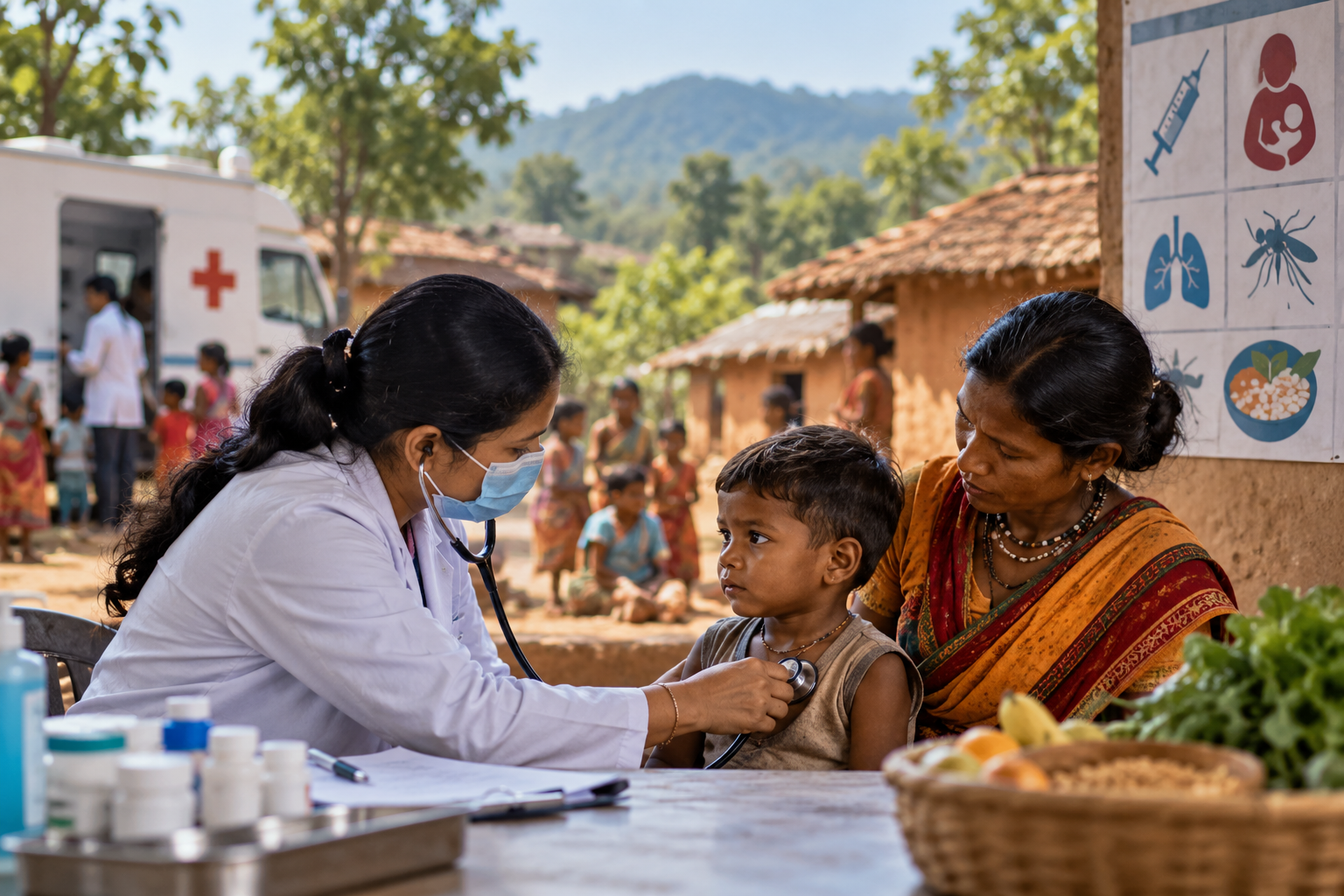
PVTG communities should not necessarily be served through the same healthcare model designed for accessible urban and rural populations. A dedicated last-mile healthcare approach is required, with specialised mobile medical teams, vaccination teams, nutrition specialists, and emergency referral facilities serving remote tribal habitations. Greater focus is needed on addressing malnutrition and immunisation gaps among children in remote and tribal areas. Most importantly, the country must stop treating malnutrition, immunisation, and infectious diseases as separate administrative issues and instead address them through an integrated child-health and nutrition framework.